Sony FE 8-14mm F3.5 Fisheye G: A Compact Zoom That Moves from Circular Fisheye to Full-Frame Coverage
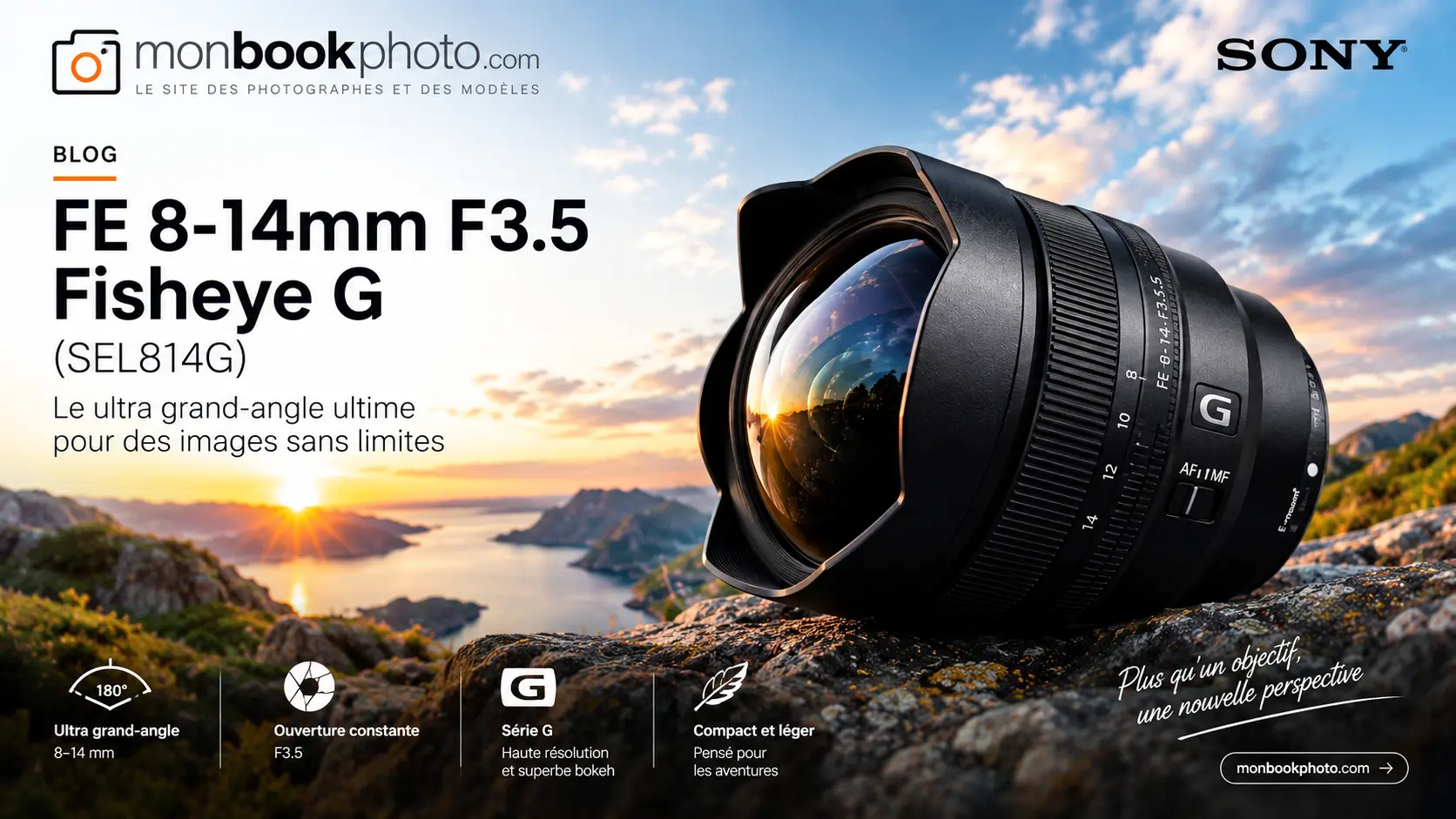
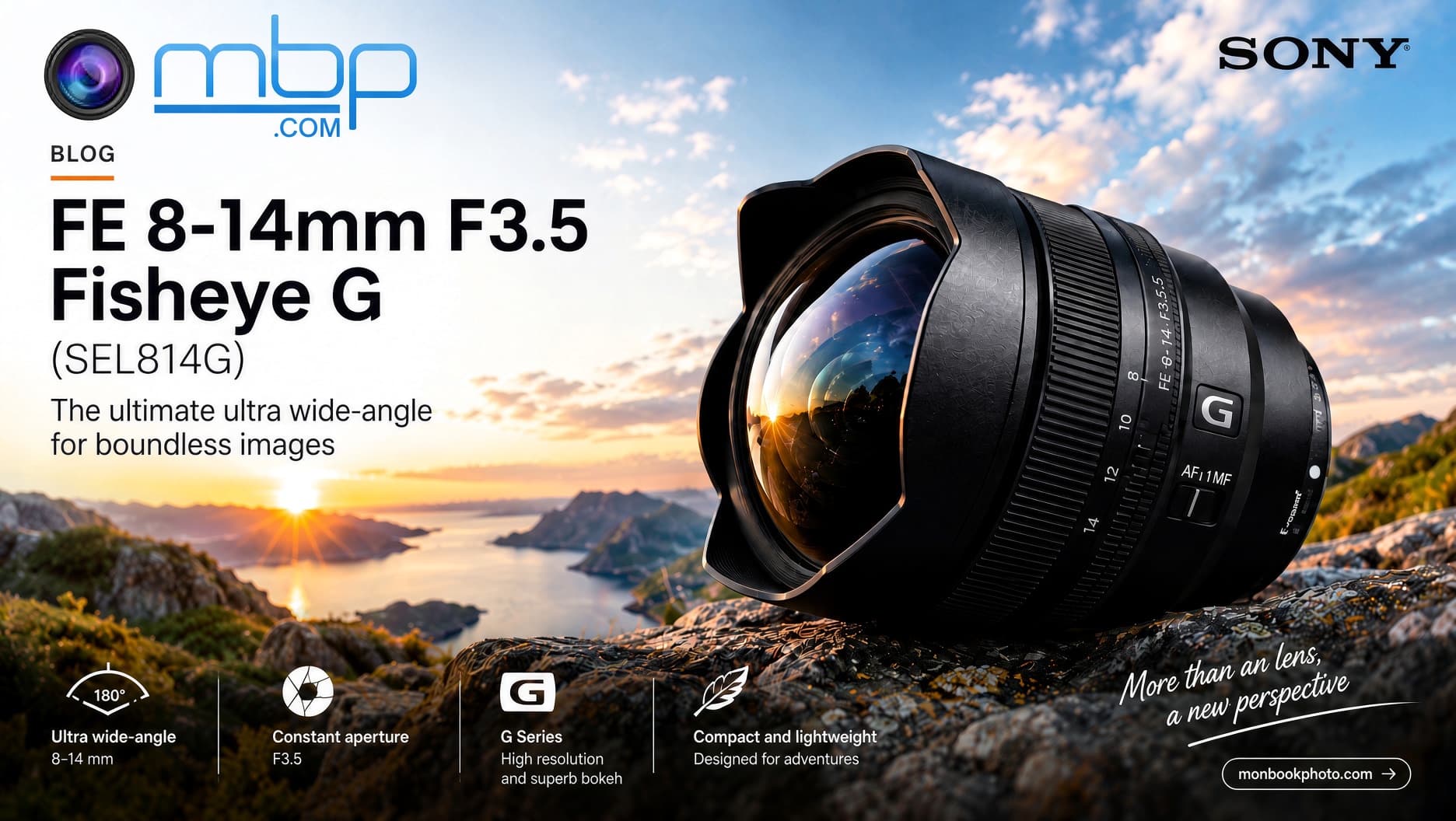
Sony officially announced the FE 8-14mm F3.5 Fisheye G (SEL814G) on 8 September 2026. It is the company’s first fisheye zoom for full-frame E-mount cameras and its first full-frame fisheye lens in twenty years. This compact, relatively light G-series optic covers a 180° field of view throughout the zoom range and lets the photographer choose, simply by turning the zoom ring, between a circular image at 8 mm and a frame-filling image at 14 mm.
It is intended for photographers and videographers seeking a distinctive ultra-wide look, whether for architecture, urban landscapes, action sports, astrophotography, or immersive and VR production.
Two fisheye renderings in a single lens
At 8 mm, the lens projects a circular 180° image onto a 35 mm full-frame sensor, with the characteristic circular-fisheye vignetting. At 14 mm, the image becomes a diagonal fisheye that fills the frame while retaining a 180° diagonal field of view. Internal zoom allows the transition from one rendering to the other without changing the barrel length.
Sony states that the projection shifts from an equisolid rendering at 8 mm (larger centre, compressed edges) to a more even equidistant rendering at 14 mm. On compatible bodies, distortion compensation can be turned off so that the photographer can choose the preferred look.
Optical design and performance
The optical formula comprises 16 elements in 13 groups, including ED glass and aspherical elements intended to control chromatic aberration and maintain high resolution across the image. The maximum aperture remains constant at F3.5; the 7-blade circular diaphragm stops down to F22.
Minimum focus distance is 0.15 m throughout the zoom range, with a maximum magnification of 0.22× at 14 mm. That close-focusing capability supports dramatic perspectives and subject separation, even if early reviews note that the bokeh can appear somewhat busy.
Two linear motors deliver fast, precise and quiet autofocus, compatible with 120 fps tracking on high-end bodies. Focus breathing is optically restrained and can be further compensated by in-camera functions. A rear filter holder is provided, as the bulbous front element precludes conventional screw-in filters.
Size, controls and field use
With a diameter of 63.1 mm, a length of 82.8 mm and a weight of approximately 314 g, the lens ranks among the most compact options in its class. Zoom and focus are internal, which helps preserve balance. The barrel is dust- and moisture-resistant (without claiming full weather sealing) and the front element receives a fluorine coating.
Controls include a clickable/declickable aperture ring, an AF/MF/FH switch (Focus Hold, particularly useful for VR), a zoom lock at 8 mm, 14 mm and an intermediate position suited to APS-C sensors, plus a customizable button.
Two copies mounted on VENICE Mini extension units enable 3D/VR capture with an interpupillary distance of about 64 mm.
Positioning and price
The FE 8-14mm F3.5 Fisheye G fills a long-standing gap in the E-mount lineup. It is lighter than Canon’s RF 7-14mm F2.8-3.5 L fisheye zoom, at the cost of a slightly slower maximum aperture and a marginally less extreme wide end.
The announced price is USD 1,599.99 and CAD 1,999.99. Availability is scheduled for October 2026 (pre-orders are already open, with deliveries estimated around mid-October).
Who is this lens for?
It is particularly well suited to:
- creators who want either a circular fisheye or a frame-filling fisheye without changing lenses;
- videographers and action or immersive filmmakers who value fast autofocus and low focus breathing;
- landscape, architecture and astrophotography shooters who use the 180° field and distortion as an expressive tool;
- users already equipped with a full-frame Sony body (or an APS-C body, with framing adapted accordingly).
It does not replace a conventional rectilinear ultra-wide-angle lens. It does, however, offer uncommon versatility in a genuinely portable package.
In short, Sony is not inventing the fisheye zoom, but it is offering a compact, autofocus G-series version that makes this specialised optic more practical for everyday use. Early reports highlight sharpness, flare control and handling, while noting somewhat busy bokeh and slightly softer corners wide open.
---
*Sources: official Sony announcements (8 September 2026), Sony Electronics product pages, DPReview, PetaPixel, B&H Photo and manufacturer specifications.*